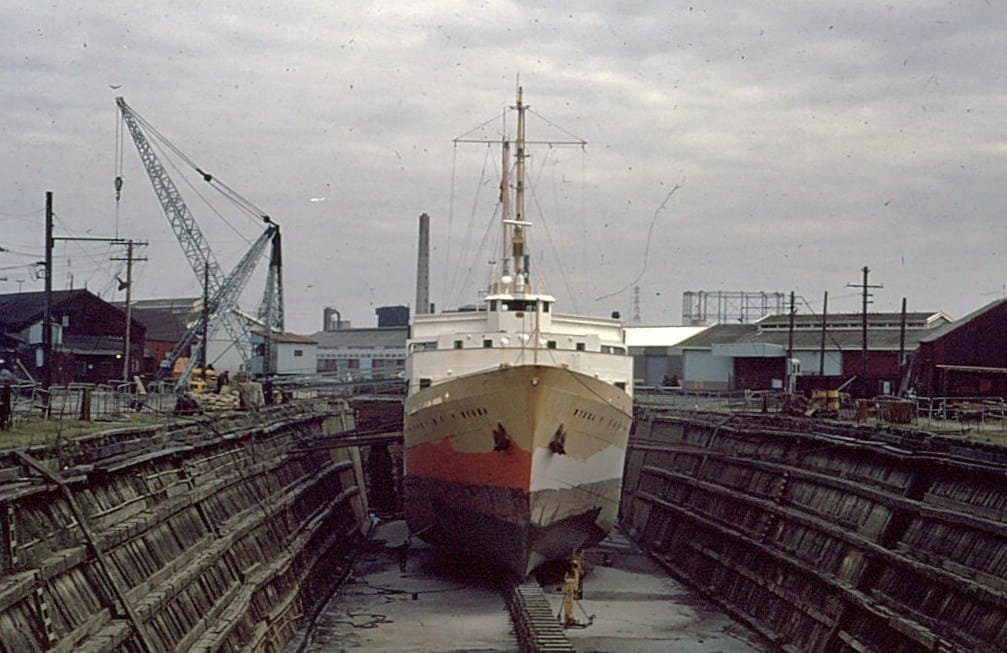
Mv Wyuna, floating museum
site managed by MvWyuna.com and Traffic safety incorporated inc org. and also vmctestwmg.com
Constructed in 1952 along Scotland’s world-renowned River Clyde by Ferguson Brothers Shipbuilding, the MV Wyuna was officially commissioned in 1953. Designed specifically as a pilot vessel for the Port Phillip Sea Pilots, her sleek 63-meter (208-foot) hull and twin-screw configuration drew strong aesthetic parallels to the iconic Royal Yacht Britannia.
Beyond her graceful lines, the Wyuna was a marvel of mid-century maritime engineering. She was outfitted with a pioneering diesel-electric propulsion system—a modern solution that provided exceptional low-speed maneuverability, impressive fuel efficiency, and instant responsiveness required for navigating the treacherous waters of Port Phillip Heads (known as "The Rip").
For over twenty-six years, the MV Wyuna served as an unwavering guardian at the entrance to Port Phillip Bay, enduring some of the most challenging sea conditions in Australia. Her primary duty was transferring harbor pilots onto incoming ocean liners, cargo vessels, and tankers bound for Melbourne and Geelong.
The transfer process was a high-stakes operational choreography:
Establishing a Lee: The incoming merchant ship would maneuver to block prevailing winds and heavy swells, creating a calm zone of water known as a "lee."
Approaching the Vessel: The Wyuna would carefully slip into this protected shelter alongside the larger vessel.
Deploying the Workboat: Her crew would launch an 18-foot, two-man timber workboat into the swell, ferrying the pilot across the open gap to board via a Jacob's ladder.
This demanding method remained standard practice until November 1979, when faster, purpose-built 13-meter pilot launches replaced the aging ship, rendering her traditional offshore station routine obsolete.
Following her operational retirement, the Wyuna entered a second life dedicated to education:
Australian Maritime College (AMC): Purchased in 1979, the vessel moved to Tasmania to become a flagship training ship for the Australian Maritime College. For decades, generations of aspiring sea officers and mariners learned navigation, seamanship, and engine maintenance aboard her decks.
Retirement from Training: Eventually, her obsolete engines and aging infrastructure made maintenance economically unfeasible, prompting the AMC to replace her with the modern training vessel Bluefin.
Private Ownership: In the 2000s, Australian businessman Clive Palmer acquired the vessel with initial plans to convert her into a luxury floating lodging project.
Preservation Efforts: When the lodging project was ultimately abandoned, ownership was transferred to business associate Gillian Swaby to facilitate historic restoration. Recognizing her immense heritage value, efforts were made to transfer the vessel to maritime preservation advocates, aiming to restore and secure the historic cutter as a museum ship showcasing Victoria's rich maritime history.
The core vision for the MV Wyuna Floating Museum is to preserve, restore, and celebrate one of Australia’s most significant mid-century maritime treasures. By transforming this historic cutter into a dynamic, living cultural hub, the project aims to honor her rich operational past while educating, inspiring, and connecting with future generations.
To achieve long-term sustainability, the MV Wyuna will leverage immersive educational programming, active public engagement, and versatile venue spaces—positioning her as a premier maritime heritage destination and a vital asset to Australia's historical landscape.
The vessel itself serves as the primary and most captivating artifact. Guided by passionate, knowledgeable maritime historical volunteers, visitors will embark on intimate journeys through the ship’s carefully preserved quarters and operational spaces.
[ SCOTLAND BUILD ] -------> [ SHIP'S SYSTEMS ] -------> [ PROPULSION ]
Ferguson Brothers Craftsmanship Naval Architecture Pioneering Diesel-Electric
Tours will specifically highlight three distinct elements of the ship's physical design:
Scottish Craftsmanship: Highlighting the robust, mid-century shipbuilding techniques of the iconic Ferguson Brothers Shipbuilders yard in Port Glasgow, Scotland.
Technical Specifications: Exploring the unique structural engineering, layout, and heavy machinery required to keep a 63-meter cutter seaworthy in southern swells.
Pioneering Propulsion: Showcasing her groundbreaking diesel-electric system—a technological marvel of the early 1950s that paved the way for modern marine propulsion design.
Curated exhibition spaces throughout the vessel will present a narrative split into two major chapters of her operational lifespan:
| ERA / TIMELINE | HISTORICAL CONTEXT | EXHIBIT HIGHLIGHTS |
The Pilot Era (1953–1979) | Danger on the High Seas Guiding international shipping through the treacherous waters of Bass Strait and the perilous "Rip" at Port Phillip Heads. | • Firsthand oral accounts & crew diaries • Vintage navigation equipment & pilot gear • Multimedia roaring-sea transfer simulations |
The Training Era (1979–2004) | Shaping Australia's Mariners Serving as the flagship hands-on training platform for the Australian Maritime College (AMC) in Tasmania. | • Recreated student mess halls & berths • Interactive navigation & knot-tying stations • Archival photos of educational voyages |
Beyond operating as a static museum, the MV Wyuna is envisioned as a vibrant, self-sustaining community asset. Her restored interior spaces will be reactivated for commercial, educational, and social functions, establishing a reliable revenue stream to directly fund ongoing hull conservation and maintenance.
Bespoke Corporate & Private Events: The ship’s heritage saloons, wood-paneled officers' cabins, and open decks provide an authentic maritime backdrop for small corporate seminars, board meetings, networking functions, and private celebrations.
Atmospheric Authenticity: Guests don't simply rent a room—they submerge themselves in 1950s maritime elegance. Every event booked directly funds the ongoing restoration and historic preservation of the vessel.
The MV Wyuna Floating Museum is far more than a nostalgic look back at mid-century naval engineering. Instead, it represents a firm, long-term commitment to keeping Australia’s seafaring legacy alive, functional, and deeply rooted in the community for decades to come.
The MV Wyuna pilot cutter holds a profound place in Australia's post-war seafaring heritage. Formally recognized as an Australian Maritime Historic Asset, she stands as a rare, surviving masterpiece of mid-20th-century Scottish naval architecture. Built in 1952 by Ferguson Brothers of Glasgow, she is the last riveted ship of her kind remaining in the country. Preserving the Wyuna protects an irreplaceable tangible link to the golden era of ocean trade, migration, and coastal seamanship.
For more than a quarter of a century, the Wyuna served as the primary gateway for Victoria’s sea trade. Operated by the Port Phillip Sea Pilots, she was stationed off Queenscliff and Point Lonsdale, serving as the first Australian vessel to greet incoming international ships bound for Melbourne and Geelong.
Incoming Vessel (At Sea) ──> Meets MV Wyuna ──> Pilot Boards ──> Safe Transit through "The Rip"
Navigation at the entrance of Port Phillip Bay requires traversing The Rip—one of the most perilous stretches of navigable water in the world. The Wyuna braved severe swells and roaring gales to station harbor pilots who safely guided massive cargo carriers, oil tankers, and ocean liners through these treacherous narrows, safeguarding Victoria's economic lifeline.
In the post-WWII boom, Australia welcomed millions of new arrivals via sea. For thousands of migrants arriving aboard historic passenger ships like the SS Oriana or SS Canberra, the sleek silhouette of the MV Wyuna waiting in the lee was their very first glimpse of their new homeland.
[ SCRAP YARD RISK ] ──> [ RESCUE & DONATION ] ──> [ VOLUNTEER RESTORATION ] ──> [ LIVING MUSEUM ]
Impending Loss Gillian Swaby & WPOA VMC Campaign Veteran Support
After ending her secondary service as a flagship training ship at the Australian Maritime College (AMC) in Launceston, the Wyuna faced an uncertain future in Tasmania, dangerously close to being sold for scrap metal.
Her preservation was made possible through extraordinary generosity and grassroots initiative:
The Rescue: Western Australian businesswoman Gillian Swaby stepped in to secure ownership of the vessel, preventing her destruction.
The Donation: Recognizing her cultural importance to Victoria, she generously donated the vessel to the Western Port Oberon Association (WPOA) / Victorian Maritime Centre.
A dedicated group of historians, engineers, and volunteers are managing the ambitious restoration of the Wyuna to prepare her for a return to Victorian waters.
┌────────────────────────────────────────────────────────────────────────┐
│ RESTORATION & COMMUNITY GOALS │
├────────────────────────────────────────────────────────────────────────┤
│ • Living Museum: Interactive access to engine rooms and bridges [1.1.2] │
│ • Veteran Wellbeing: Hands-on restoration work for defense vets [1.2.2] │
│ • Youth & Education: Overnight stays and maritime training camps [1.2.2]│
└────────────────────────────────────────────────────────────────────────┘
The vision extends far beyond creating a static exhibit. Once restored, the MV Wyuna will operate as a living museum and community asset:
Living History: Visitors will be able to walk her timber decks, explore the mid-century diesel-electric engine room, and experience post-war seafaring firsthand.
Veteran Rehabilitation: The project doubles as a practical wellbeing program where Australian defense veterans assist in maintaining the ship and learning traditional seamanship.
Youth & Educational Stays: The ship will host school groups and youth organizations for immersive overnight stays aboard an operational heritage cutter.
The MV Wyuna—a magnificent 1952 Scottish-built, diesel-electric pilot cutter—is currently undergoing a historic restoration. For decades, she served as the primary guardian of Victoria’s sea trade, braving the treacherous waters of The Rip at Port Phillip Heads, and later training generations of mariners at the Australian Maritime College.
Today, under the care of the Victorian Maritime Centre, she is being transformed into a vibrant, living floating museum and community asset. But restoring a 63-meter historic vessel takes a dedicated fleet of passionate people—and that is where you come in.
Preserving maritime history isn't just about picking up a paintbrush (though we always need extra hands for that!). It takes a diverse array of skills, interests, and contributions to bring a vessel like the Wyuna back to life:
Hands-on Restoration: Got a knack for woodworking, metalwork, mechanics, or painting? Help us restore timber decks, polish mid-century brass, and maintain her historic propulsion systems.
Guiding & Storytelling: Love talking to people? Become a tour guide to share the high-seas adventures of the Port Phillip Sea Pilots with students, tourists, and history buffs.
Behind-the-Scenes Support: Prefer working behind the scenes? We always need help with archiving historical photos, managing community outreach, grant writing, and event planning.
Donations & Sponsorship: If time is limited, financial contributions, material donations, or corporate sponsorships directly fund critical hull maintenance and safety upgrades.
┌────────────────────────────────────────────────────────────────────────┐
│ VOLUNTEER & SUPPORT BENEFITS │
├────────────────────────────────────────────────────────────────────────┤
│ • Hands-On History: Get direct access to a rare 1950s vessel │
│ • Community & Comradeship: Work alongside veterans, engineers & buffs │
│ • Skill Sharing: Learn traditional maritime maintenance and crafts │
│ • Legacy Building: Ensure future generations experience living history │
└────────────────────────────────────────────────────────────────────────┘
When you join this effort, you aren't just saving steel and timber—you are preserving the stories of the brave pilots who met international ships in roaring seas and the young recruits who learned their craft aboard her decks.
Whether you can commit a few hours a week, offer a specialized skill, or support the project through a tax-deductible donation, every contribution brings the MV Wyuna one step closer to her grand re-opening as a flagship maritime destination.
Don't let this history drift away. Visit the MV Wyuna Restoration Project today to learn how you can become an active part of Australia's living seafaring legacy!
site managed by MvWyuna.online and Traffic safety incorporated inc org. and also vmctestwmg.com including